

This is Part 1 of Karan Kapoor’s Prose Poetry Masterclass
Hello, friends! Thank you for being here.
I am Karan Kapoor, your instructor for the next few weeks. I spend my days writing (lies!), playing with my daughter, and editing ONLY POEMS, and am good at almost nothing else. My first introduction to surreal poetry was through Bob Hicok and Luke Kennard, and really I haven’t looked back since. I’ve spent many nights reading through surreal manifestos and other ridiculous stuff and hope that some of what I know about poetry and surrealism will be half as interesting to you as it is to me.
Over the next few weeks, we’ll canoe through the surreal seascape of prose poetry, exploring various forms and techniques to help you create your own surreal masterpieces. We'll begin by understanding the roots and essence of Surrealism, and then delve into the different mediums that can inspire your prose poems, from visual art to film, music, and beyond. Each lesson will introduce new forms and exercises to stretch your imagination. My hope is that you finish this course with at least a dozen kick-ass prose poems that you can send out.
Given the nature of the Forever Workshop, it's likely that some of you may be unfamiliar with surrealism, and even prose poems for that matter, so I’ve dedicated Lesson 1 to introducing them to you by presenting what I believe to be the essentials.
My goal is to help you determine whether one or both of these styles resonate with you as a writer — remember, I’m very biased.
An Elevator Pitch For Surrealism
Surrealism was brewed in the early 20th century by a bunch of French dudes, André Breton being the leader (eh, really?), but he did write the Manifesto for Surrealism (so did Yvan Goll at the same time (1924)) so people refer to him as the father of Surrealism.
The first manifesto, arguably the most important one, is readily available and I urge you to read it. It defines surrealism as a revolutionary artistic movement aimed at expressing the unconscious mind. It emphasizes imagination and dreams, rejecting rationalism and materialism.
Breton's manifesto set the stage for surrealism as a means to explore and liberate the human spirit through creativity and art. If you’re too busy or lazy to read it, here are my bite-sized takeaways…
Surrealism's Definition and Purpose
Breton goes right at it and defines Surrealism as “pure psychic automatism, intended to express thought without the constraints of reason, aesthetics, or morality.”
It aims to resolve the contradictory conditions of dream and reality into an absolute reality, a super-reality (sur-reality).
Rejection of Rationalism and Materialism
All moments arise in response to the world outside. Breton criticizes the realistic and materialistic attitudes for being restrictive and stifling the imagination. (Who agrees with that? Me too!)
He argues that these attitudes hinder intellectual and moral advancement, promoting mediocrity and conventionality. (*Deletes Amazon, Netflix, Instagram, etc.*)
Surrealism as a Revolutionary Movement
Surrealism is positioned as a revolutionary movement that seeks to overthrow conventional artistic and intellectual norms.
Breton envisions surrealism as a means to achieve greater intellectual and spiritual liberation.
Imagination and Freedom
The manifesto celebrates imagination as the ultimate form of freedom, capable of surpassing the limits imposed by rational thought.
Breton emphasizes that imagination should not be reduced to a state of slavery by societal norms and utility.
Role of Madness
Breton acknowledges madness as a form of liberation from societal constraints and a source of comfort and consolation.
He argues that the fear of madness should not prevent the exploration of imagination. (Probably asked women to do real weird shit in bed.)
Influence of Dreams and the Unconscious
Breton highlights the importance of dreams and the unconscious mind, drawing on Freud's psychoanalytic theories (the y’all-want-to-sleep-with-your-mothers guy).
He asserts that dreams provide a continuous, organized psychic activity that is often dismissed or neglected by waking consciousness. (Salvador Dalí held a heavy metal key between the thumb and forefinger of his left hand, and placed an upside-down plate on the floor directly below the key. The instant Dali dozed off, the key would slip through his fingers, clang the plate, and awaken him from his nascent slumber, and he’d use that state between sleep and wakefulness to inspire him. Another really weird dude, but IMHO, the coolest artist ever.)
Surrealist Techniques
The manifesto encourages the use of automatic writing, a technique where the writer records thoughts rapidly without censorship or rational intervention (has some pros, mostly cons).
Surrealism also embraces the creation of surrealist images that emerge spontaneously and despotically, challenging conventional logic.
Critique of Literature and Art
Breton also criticizes contemporary literature for its adherence to realism and its failure to engage the imagination.
He praises works that incorporate the marvelous and the surreal, citing examples like Matthew Lewis's The Monk (Gothic-horror, if you’re into that kind of shit) and the writings of Gérard de Nerval (who has ever heard of them?).
Examples of Surrealist Artists and Writers
Breton lists various writers and artists whose works embody surrealist principles, including Dante, Shakespeare, Baudelaire, Rimbaud, Apollinaire and others.
He emphasizes that these figures, while not always surrealist, contributed to the movement through their imaginative and unconventional approaches.
Surrealism, as a movement, was heavily influenced by Freud’s theories on the unconscious, and the Great War (World War 1). All in all, Breton's manifesto set the foundation for Surrealism as a movement that prioritized imagination, freedom, and the exploration of the unconscious. Presented as a revolutionary force capable of transforming human perception and creativity, he rejected the tyranny of rationalism and materialism in favor of a liberated, surreal approach to art and literature.
The Prose Poem as a Surrealist Medium
Over the last few years, I’ve come to embrace the prose poem as my most favorite form to read and write. I find it the most accessible, imaginative, challenging, playful (sometimes to the point of being absurd) form, much better (in my head) than inaccessible abstract poetry that has garnered more attention than anyone would’ve hoped for. Prose poem, the bastard child of flash prose and poetry, is the best of both worlds. It weaves together the lyric and the narrative in ways that are accessible, digestible, and most importantly, enjoyable.
Aside: T.S. Eliot (whose poetry I really admire) vehemently hated prose poetry. I say, fuck him!
Origins of the prose poem
Matsumoto Bashō originated haibun, a form of prose poetry combining haiku with prose (it’s gaining more and more popularity now), in the 17th century. The Western prose poem, since its origins lie in early 20th century France — some were writing it a bit before: Rimbaud, the true daddy of surrealism, published Illuminations (the first ever collection of prose poems in Western lit) in 1886 — is often surreal. Rimbaud, alongside Charles Baudelaire and Stéphane Mallarmé, were the precursors of the prose poem as well as Surrealism.
How to Use Other Mediums of Art to Influence Your Surreal Prose Poem

Visual Art
My first conscious introduction to Surrealism was Salvador Dalí’s paintings. The way my sense of reality was challenged by Dalí was deeply influential in the way I looked at the world. I couldn’t look at clocks the same way for instance, which is to say my relationship with time was dismantled.
I recommend looking at artworks of surrealist painters like Dalí, René Magritte, Remedios Varo, Max Ernst, Vladimir Kush, Frida Kahlo. Experiment with vivid, bizarre imagery and unexpected juxtapositions. Take phrases and metaphors literally and see where they take you, as Dalí perhaps did the phrase “time is fluid” in context of Einstein’s Theory of Relativity in his masterpiece, The Persistence of Memory. Surrealism is everywhere in our language where we take it without even thinking of it as surreal. Take for instance, “raining cats and dogs”
Film
Study directors like Luis Buñuel, Maya Deren, Germaine Dulac, David Lynch, and Federico Fellini. Scratch study, just watch the films. I know a poet who watches foreign films on mute and takes notes of images, thoughts, memories sparked by the visuals. Though it can be done with all films, I have good reason to believe it’d be an enriching experience to do it with these filmmakers. How do you incorporate cinematic techniques like jump cuts, montages, and dream sequences in your poems?
Music
My love for music deeply influences my poetry. In fact, I’d stretch that far enough to say, being a writer for me is a failed attempt at music. I can’t tell you with confidence the names of any musicians that are classified as surrealists, though there are reddit forums that would leave you to some names. I recommend, though, exploring surreal soundscapes and lyrics by someone like Björk, for instance, whose eclectic style and innovative use of technology create otherworldly soundscapes. See how mirroring that dissonance, unexpected rhythms, and lyrical non-sequiturs in your writing evoke a sense of unease and wonder. Just as in music, clashing images or ideas can jolt the reader, and varying sentence length and structure can mimic unpredictable rhythms, creating a dynamic flow. Let a piece of music guide the structure and flow of your writing, transforming everyday madness into beautiful, otherworldly art.
Photography
Two of my favorite things about photographs are frames and perspective. From where (what angle, what distance, what lens) are we looking at the subject? How is the photograph framed — is there a lot of negative space, is there none, is it symmetrical or intentionally and weirdly asymmetrical?
For fun, analyze photographs by artists like Man Ray and Dora Maar. Introspect how you would integrate photographic techniques like double exposure and unusual perspectives into prose? How can you change the lighting of a poem? Can you up the ambiguity, or make it sharper? What does a particular poem need in editing — do we increase the highlights, or the shadows?

5 Examples of Surreal Prose Poems from 5 Different Poets
Arguably the easiest way to get inspired to write surreal prose poems is to, in fact, read surreal prose poems. To keep things manageable I’ve selected 5 poems by 5 poets I really admire. I think they all do an excellent job of showing the different directions we can go to explore the surreal. Each poem provides a unique approach to blending reality and imagination, demonstrating the versatility and depth of the form. Let's dive into these examples to see how different techniques and perspectives will hopefully inspire some of your own poems.
Sex, Night
Once again, someone falls in their first falling–fall of two bodies, of two eyes, of four green eyes or eight green eyes if we count those born in the mirror (at midnight, in the purest fear, in the loss), you haven’t been able to recognize the voice of your dull silence, to see the earthly messages scrawled in the middle of one mad state, when the body is a glass and from ourselves and from the other we drink some kind of impossible water.
Desire needlessly spills on me a cursed liqueur. For my thirsty thirst, what can the promise of eyes do? I speak of something not in this world. I speak of someone whose purpose is elsewhere.
And I was naked in memory of the white night. Drunk and I made love all night, just like a sick dog.
Sometimes we suffer too much reality in the space of a single night. We get undressed, we’re horrified. We’re aware the mirror sounds like a watch, the mirror from which your cry will pour out, your laceration.
Night opens itself only once. It’s enough. You see. You’ve seen. Fear of being two in the mirror, and suddenly we’re four. We cry, we moan, my fear, my joy more horrible than my fear, my visceral words, my words are keys that lock me into a mirror, with you, but ever alone. And I am well aware what night is made of. We’ve fallen so completely into jaws that didn’t expect this sacrifice, this condemnation of my eyes which have seen. I speak of a discovery: felt the I in sex, sex in the I. I speak of burying everyday fear to secure the fear of an instant. The purest loss. But who’ll say: you don’t cry anymore at night? Because madness is also a lie. Like night. Like death.
The Virgin Forest
by Aime Cesaire
I am not one of those who believe that a city must not rise to catastrophe one more back twisting neck twisting twist of stairs it will be the snap of the promontory I am not one of those who fight against the propagation of slums one more shit stain it will be a real swamp. Really the power of a city is not in inverse ratio to the sloppiness of its housekeepers as for me I know very well into what basket my head will never again roll. Really the power of a glance is not an inverse function of its blindness as for me I know very well where the moon will not come to rest its pretty head of a hushed-up affair. In the corner of the canvas the lower-class despair and my mug of a primate stoked for three hundred years. In the middle the telephone exchange and the gas plant in full anthesis (betrayal of coal and field-marshals). In the west-west corner the floral metabolism and my mug of a primate dismantled for three hundred years the nopal smoke a nopal in the gorged landscape the strangler fig trees make an appearance salivated from my mug of a sphinx muzzle unmuzzled since nothingness.
Cilantro Man
by Ray Gonzalez
He wants to smell like his grandmother's hands, so he carves a song out of cement he finds on the porch, fading letters from lost graffiti telling him to drop the cement and pull roses from the garden instead. His bloody fingers lead him into the house where his lover waits for him, her purple dress sliced in half, his medallion from the war glowing between her breasts. He wants to be careful, carry the flag, but she twists like the river he crossed when he ran out of ideas, the cilantro in her darkness the aroma from a memory he used to have. He takes his time when she punches the wall, mouths the many births of cilantro into his knees, sends him reeling across the room so she can leave without having to confess. He wants to rise like a boy, but stands up as a man, his smile the arrow the black puma falls upon when it climbs over the wall in the jungle to be greeted by a circle of exhausted, sleeping men.
NIGHT FALLS LIKE A BUTTON
by Chen Chen
from your grandmother's coat. You worry with your thumb the stranger's page. Aging spine of the black sky, night-burps of the sleeping computer. Don't listen to the judgment of your scraped knees. Night anchors in your belly button, your pubic hair. Stars snore safely, for years. Your smile in the early dark is a paraphrase of Mars. Your smile in the deep dark is an anagram of Jupiter. My worst simile is that I'm fancy like a piece of salami wearing a tuxedo. Waiting with a cone of gelato. Your smile in the dreaming dark is an umbrella for all the going, gone, & yet to come. Orioles come for the oranges you've placed in the arms of the architect. Which birds will you pull into orbit tomorrow? You try to sew the night onto your own coat, but it won't stay. Too much memory weather, werewolf migration. You itch for the window's shore. You row, the growing light rearranging your voice, the rain your lunatic photographer.
How to Build a Thirst Trap
Refill your prescriptions on time. Trade in your quilted blanket for a pair of heels. Trip down a flight of stairs. Drink Cabernet Sauvignon straight from the bottle. Never wake up before your alarm. Wear your hair long. Wear your hair short. Shave off all your hair and learn how to play poker. Buy a bra that makes your tits look like Daytona Beach in the spring. Forget you bought the bra. Breed dinosaurs so you have a reason to hold hands and run through a forest with Jeff Goldblum. Go to Starbucks and spill coffee on every man peppered in salt. Touch their wrists. Look each of them in the eye and say, Oh, my my. Go to bed with rug-burned knees. Keep your phone charged. Briefly date a man who speaks in semicolons and traces rollercoasters down your spine. Make out on a park bench seventeen minutes before the start of fall. Buy a removable shower head. Buy a yoga mat. Drink eight glasses of water every day. Stop lying to your psychiatrist and actually take the prescriptions you refilled on time. Replace your shoulder blades with a pair of wings. Fly directly into the sun.

Assignment 1
Write a surreal prose poem about how to write a surreal prose poem and share it below.
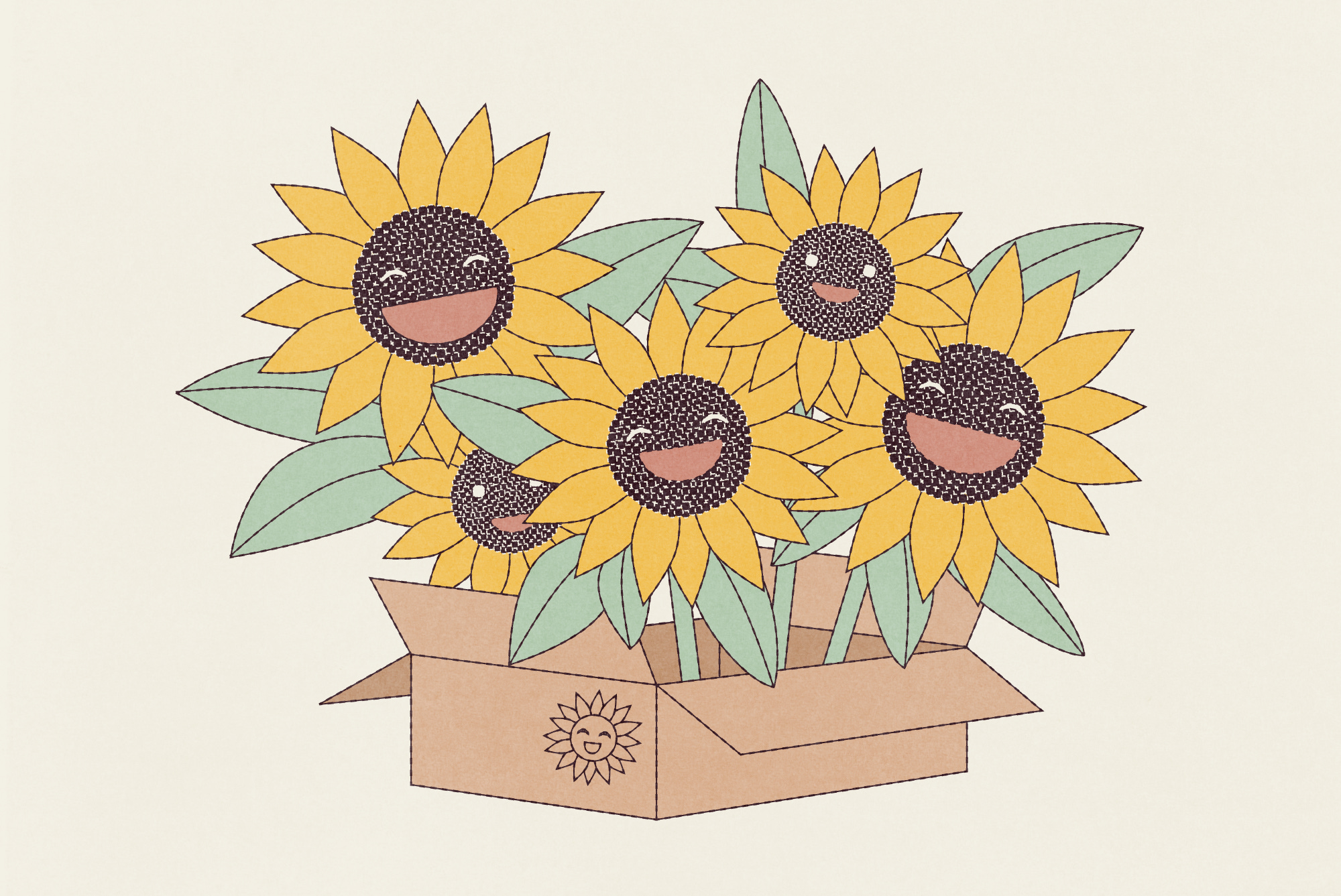
Imagine you are a surrealist guide, instructing a novice on the craft of surreal prose poems. Describe the process in vivid, bizarre detail, incorporating elements of surprise and the uncanny. Example: “Pluck the smallest star from the midnight sky on a Tuesday. Blend it with a few sunflower petals. Go…”
I encourage you to read your classmates contributions and when you come upon a piece that resonates with you, comment on the work. Since this is lesson 1, now would be a lovely time to make a feedback friend to collaborate with throughout the lessons that follow.
In Lesson 2 we'll examine the distinctions between prose poetry and flash fiction, then explore how surrealism intersects with absurdism, experimental writing, and camp — finishing off by adding a few essential surrealist techniques to your toolbox…

And in the meantime, here are some….

Write one verse, then another, a daisy chain of little white words with a sun inside. Like my mother made. Like my mother made when she was still an angel. With a halo outside her raven black hair, her beauty shining into the June sun, it was my birthday. Three birthdays, maybe four, maybe five, then the halo wore off, from sunshine to gold, from gold to brass, then it brittled and fell down piece by piece at our feet. Hers and mine. We spent the next fifty-three years staring at them. Sometimes we saw the daises shine through, sometimes the gold, but mostly it was dust neither of us wanted to take a broom to. She picked up the odd piece and crocheted it into a blanket, knitted it into a sock, cross-stitched it into a tiny little carpet. Me, I crawled around on those pieces and to my knees stuck words starting with B, alliterations, sandpainting-stories, and commas I had to defend with my life.
This was so fun! Here is my stab at the assignment:
Step by Step Instructions for Writing Prose Poetry
Open your mouth wide, now keep it open all day. Collect on your tongue all the dust motes and dog hair floating in your home. Open two to three of your favorite books and flip the pages, allowing the words to tumble like scrambled Scrabble tiles toward your back molars. Now, open your front door and tilt your head back, better to collect the individual wave and particle from a single drop of sun. If seven to eight notes from a bird song also skip onto your tongue, all the better. If it is spring, collect a dead dandelion head and store it beneath your tongue. If it is fall, collect a single gold or red oak leaf between your top right incisor and gumline. Next, go meet one true friend at a coffee shop and collect drops of their breath as they tell you about the new green sweater they bought at the thrift store and then tell you they love you when you say goodbye. Allow these droplets to collect like summer dew on the part of your tongue that detects the taste of sweetness. If you can, go to see a play in the park. Casually steal lines from the actor’s lips and tuck them behind your tonsils, where no one would think to look. Find the children doing cartwheels in the grass and take one to two large gulps of their joy. Let this fill your left cheek until it is round as a chipmunk’s. As you walk home, find two lovers fighting and walk behind them so you can capture one or two sips of heartache. Be careful not to catch to much. Once home, close your mouth and swish and swirl it all together while you roll a piece of paper into the shape of an ice cream cone. Spit into the cone and watch the words collect on the page. Smooth the paper flat and read what appears. Try not to cry.